How Often Should You Water Your Lawn in Florida?
How Often Should You Water Your Lawn in Florida?
Watering your Florida lawn too often can be just as damaging as not watering it enough. The right schedule depends on your grass type, soil, rainfall, season, and whether your lawn is newly installed or established.
In Panama City, Panama City Beach, Lynn Haven, Callaway, Southport, Mexico Beach, and surrounding Bay County communities, sandy soils and changing weather make it especially important to adjust irrigation to actual lawn conditions rather than relying on the same timer settings year-round.
Florida Lawn Watering: The Quick Answer
- For an established lawn, water when the grass begins showing drought stress, rather than automatically watering every day.
- Apply approximately ½ to ¾ inch per irrigation when needed, adjusting for soil conditions and runoff.
- Water in the early morning, ideally near sunrise, to limit evaporation and prolonged leaf wetness.
- Reduce or skip irrigation after meaningful rainfall and during cooler, slower-growing periods.
- New sod needs a different establishment schedule until roots develop; follow the installer’s grass-specific instructions.
How Much Water Does an Established Florida Lawn Need?
University of Florida IFAS guidance recommends applying roughly ½ to ¾ inch of water during an irrigation event once an established lawn shows signs of needing moisture. This is an amount per watering, not a rule to water every day. The number of watering days varies with weather, soil, grass type, and local restrictions.
Water enough to moisten the root zone without creating puddles or runoff. Frequent, shallow watering can encourage shallow rooting, while excessive irrigation can keep soil too wet and increase lawn problems.
Signs Your Lawn Needs Water
- Grass develops a bluish-gray or dull appearance.
- Leaf blades fold or curl lengthwise.
- Footprints remain visible instead of springing back.
- Dry areas appear, especially in sunny or windy locations.
Signs Your Lawn May Be Getting Too Much
- Soil stays soggy or water pools after watering.
- Runoff flows onto sidewalks or driveways.
- Persistent damp conditions favor fungal disease.
- Mushy areas appear even when rainfall has been frequent.
Why Early Morning Is the Best Time to Water
The best time to irrigate most Florida lawns is in the early morning, generally near sunrise. Cooler temperatures and lower evaporation help more water reach the soil, and grass blades can dry as the day warms up.
Midday watering can lose more moisture to evaporation. Late-day or evening watering may keep the grass wet longer, potentially increasing fungal disease pressure. Always follow local watering-day and time restrictions, even if your preferred window is different.
How Sandy Florida Soils Change Watering Needs
Many Bay County yards have sandy soil that drains quickly and holds less moisture than heavier soil. That can make turf dry out sooner during hot, windy weather, particularly in full sun or near the coast.
However, sandy soil does not mean you should run sprinklers every day. Check for drought symptoms, deliver the appropriate measured amount, and let the lawn tell you when it needs another irrigation. Compacted areas, slopes, and shaded sections may behave differently from the rest of the yard.
Should You Water More Often in Summer Than Winter?
Spring & Summer
As warm-season grasses actively grow, higher temperatures, longer days, and dry spells can increase water demand. Summer storms may also provide enough moisture to skip scheduled irrigation. Check rainfall and actual turf condition before watering.
Fall & Winter
As temperatures drop and growth slows, many Florida lawns need less supplemental irrigation. Dormant or slow-growing turf should not receive the same automatic watering schedule used in peak summer heat. Monitor conditions rather than watering by habit.
Florida Lawn Watering: Seasonal Guide
Use this quick reference alongside your grass type, rainfall, local watering restrictions, and signs of drought stress. These are guidelines, not automatic watering-day prescriptions.
| Season | What Changes | Recommended Approach |
|---|---|---|
| Spring | Warmer days, more active growth | Check for wilt; increase irrigation only as needed. |
| Summer | Heat, humidity, afternoon storms | Account for actual rain; skip unnecessary scheduled cycles. |
| Fall | Cooling temperatures, slower growth | Reduce frequency when conditions allow. |
| Winter | Slow growth or dormancy | Water sparingly when conditions warrant; avoid a summer schedule. |
New Sod vs. Established Turf: Different Watering Rules
Freshly installed sod does not yet have the developed root system of an established lawn. It generally needs frequent, carefully managed moisture during its initial establishment period so that the sod and the soil beneath it do not dry out.
As roots begin growing into the soil, watering should gradually transition toward deeper, less frequent irrigation. The correct duration and frequency depend on sod variety, installation season, soil preparation, rainfall, and site conditions.
Avoid leaving new sod waterlogged, and follow the installer’s establishment plan rather than applying the mature-lawn schedule immediately.
Turf-MD installs sod for Bay County properties and can help homeowners understand how to care for new turf. Learn about our Sod Installation services.
Check Your Irrigation Coverage Before Increasing Run Times
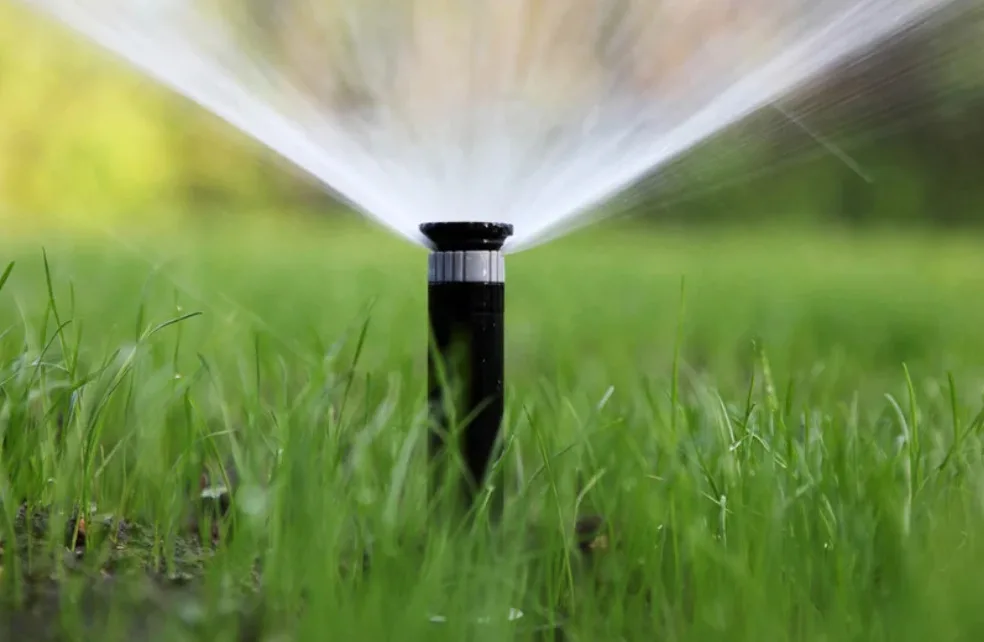
An uneven-looking lawn may have an irrigation coverage problem rather than a need for longer watering across the entire property. Sprinkler heads that are clogged, misaligned, blocked, leaking, or delivering uneven amounts can leave dry patches beside overly wet areas.
To check coverage, place several straight-sided cans around one sprinkler zone and run it for a measured period. Compare the water depths collected. If one area receives much less water than another, inspect the spray pattern and equipment before increasing every zone’s watering time.
Measure each zone separately because spray heads and rotors can apply water at different rates.
Visual Check: Is One Sprinkler Zone Watering Evenly?
The editable comparison below uses illustrative catch-can measurements from a single 15-minute test. The bars are not suggested watering times or actual Turf-MD field data.
| Catch-Can Location | Water Collected | Visual Comparison |
|---|---|---|
| Near sprinkler | 0.30 in. | ■■■■■■ |
| Center of zone | 0.20 in. | ■■■■ |
| Far edge | 0.10 in. | ■■ |
What This Coverage Test Tells You
In this example, the wettest location gets three times as much water as the driest. Running the entire zone longer could overwater one area without fixing the dry spot. Correct the sprinkler coverage first, then calibrate that zone to deliver roughly ½–¾ inch when established turf needs water.
Common Irrigation Problems
- Broken or tilted sprinkler heads
- Clogged nozzles and inconsistent spray patterns
- Overspray onto pavement or fences
- Leaks, low pressure, or poor zone coverage
- Timers left unchanged after heavy rain
Simple Ways to Improve Watering
- Inspect each irrigation zone while it runs.
- Use a rain sensor or other appropriate controller settings.
- Measure water output using straight-sided cans.
- Adjust run times for each zone individually.
- Recheck coverage as landscaping and seasons change.
How Irrigation and Lawn Treatments Work Together
Proper watering supports healthy turf, but it cannot fix every lawn problem. Brown patches, thinning turf, discoloration, and uneven growth can also involve disease, insects, nutrient deficiencies, or drainage issues. Too much irrigation can make some of those conditions worse.
Lawn treatments and irrigation should be coordinated. Certain fertilizers and weed-control products have specific watering requirements, so always follow the treatment label or your lawn care professional’s instructions rather than using one blanket watering rule.
Explore Turf-MD’s Chemical Lawn Care services for help identifying and managing turf problems.
Professional Lawn Irrigation Services in Bay County
Turf-MD provides irrigation and sprinkler system installation, maintenance, troubleshooting, repairs, and adjustments for properties across Panama City, Panama City Beach, Lynn Haven, and surrounding Bay County communities.
Whether your lawn has dry spots, excessive moisture, or inconsistent sprinkler coverage, the goal is to get water where it is needed without unnecessary waste.
Learn more about Turf-MD Irrigation & Sprinkler Systems or request an estimate.
Frequently Asked Questions About Watering Florida Lawns
Should I water my Florida lawn every day?
Usually not if the lawn is established. Water when the turf shows signs of drought stress, and adjust for rainfall and seasonal conditions. Newly installed sod is an important exception during establishment.
How long should I run my sprinklers?
There is no single correct number of minutes. Measure your irrigation output with straight-sided cans, then set each zone to deliver about ½ to ¾ inch when the established lawn needs watering, without runoff.
Should I water after it rains?
If rainfall already supplied enough moisture, skip supplemental irrigation. Rain sensors and regularly checking soil and turf condition can help avoid unnecessary watering.
Can too much watering cause brown patches?
Yes. Persistent excess moisture can contribute to disease and root stress, although brown patches can have several causes. Check irrigation coverage and diagnose the underlying issue before making major changes.
Additional Florida Lawn Watering Guidance
For statewide best practices, see the University of Florida IFAS guide to Watering Your Florida Lawn. Always check applicable local irrigation restrictions before setting your controller.